Earning Allah's pleasure…

In the Name of Allah, most Gracious, most Merciful.

Prophet Musa (Moses) (A.S) often conversed with Allah at Mount Sinai, during one of these conversations, Allah asked: “Musa, what have you done for me; what good deed have you performed for My sake?”

Musa (A.S) replied: Lord, I have prayed, fasted and given alms”

Allah responded: “Prayer is the mark of religion, fasting is a shield against the fire; as for giving alms, whose property did you give and to whom did you give it?

Musa (A.S) asked to learn the deeds that would earn Allah’s pleasure and these words came from on high:

“You shall love whatever you love to please me alone; you shall likewise dislike whatever you dislike only to please me. This is the action most acceptable in My sight, the one that will earn you My good pleasure.”

Remember “…every person will earn that which he intended…” so remember Allah, make a sincere intention and do for the sake of Allah and you will earn Allah’s pleasure.

… “The deeds most loved by Allah are those done regularly, even if they are small.”

Unconditional Charity…

In the name of Allah, most Gracious, most Merciful.

Last weekend was the Salvation Army’s Door Knock Appeal and when I heard about it, I thought about whether or not I would donate to the cause and it reminded me of a story I read as a kid about the Prophet Ibrahim (A.S) or Abraham (PBUH).

Ibrahim (A.S) would never touch food unless there was a beggar in his house, when no beggars visited in a few days, he began to wonder if it was through some fault of his own that God had not sent a beggar to him. Eventually, a beggar came knocking at his door and when he inquired, he learnt that the beggar was a Magian or Fire worshipper. Ibrahim (A.S) proclaimed, ” I cannot help unbelievers who attribute partners to Allah and wander about in this condition. Go away till you have repented, asked forgiveness of God, embraced Islam and cleaned yourself up. Then you will come back to an open door.” As the begged left, Ibrahim heard these words from above: ” Ibrahim, since I, with my Godhead, do not deny him sustenance, despite the fact that he disobeyed me and committed the one sin I do not pardon, namely that of attributing partners to Me, how could you – My servant – send him away without even a crust of bread? Go and make it up to him at once. If you had done this for your own sake, rather than to please Me, I would have wiped you from My friendship.

Upon receiving this divine command, Ibrahim (A.S) took to the road until he found the beggar. He treated him kindly, invited him into his home and fed him well. Through this generosity and charity, the beggar turned to Allah and was blessed with the honour of true faith.

The story demonstrates the importance of unconditional charity and the value of Da’wah through action. Most people would donate to their own religious groups, the true test arises when you are approached by members of other faiths. I still maintain a preference for Islamic Charitable Organisations and I don’t think there can be anything wrong in that, however, the story of Ibrahim (A.S) encourages us as Muslims to be charitable to all of God’s creation.

The Prophet Muhammad (peace be upon him) said: “The believer’s shade on the Day of Resurrection will be his charity.” – Al-Tirmidhi, Hadith 604.

Etiquette of the day of Jumuah: A short reminder…

In the Name of Allah, most Gracious, most Merciful.

Ali Ibn Abu Taalib (RA) narrated:  When Friday comes, the devils go to the markets with their flags, and involve people in their needs and prevent them from the Friday prayer. The angels come early in the morning, sit at the door of the mosque, and record that so-and-so came at the first hour, and so-and-so came at the second hour until the imam comes out (for preaching). When a man sits in a place where he can listen (to the sermon) and look (at the imam), where he remains silent and does not interrupt, he will receive a double reward. If he stays away, sits in a place where he cannot listen (to the sermon), silent, and does not interrupt, he will receive the reward only once. If he sits in a place where he can listen (to the sermon) and look (at the imam), and he does not remain silent, he will have the burden of it. If anyone says to his companion sitting besides him to be silent (while the imam is preaching), he is guilty of idle talk. Anyone who interrupts (during the sermon) will receive nothing (no reward) on that Friday.

Blessed Jumuah…

Choosing your place in a gathering…

In the name of Allah, most Gracious, most Merciful.

I read a Hadith narrated by Abu Waqid Al-Laith (RA) which tells of three men at a gathering. One of the men found a place within the circle of the gathering, the other sat behind the gathering and the third man walked away. When Prophet Muhammad (S.A.W) completed his talk he said, “shall I tell you about these three persons? One of them betook himself to Allah, so Allah took him into His Grace and Mercy and accommodated him, the second felt shy from Allah, so Allah sheltered him in His mercy (and did not punish him), while the third turned his face from Allah and went away, so Allah turned His face from him likewise.”

I will remember this the next time I am present in a gathering and I hope we can all benefit from this Hadith. Let us be among those whom Allah takes into His Grace and Mercy.

I think it’s important that when we learn or become aware of such teachings that we avoid judging the actions of others. It is through Allah’s mercy that we attain such knowledge and through these actions we may earn His pleasure. Don’t spoil the reward of such an action by judging others or by making them uncomfortable. People may leave Islamic gatherings or might prefer to sit outside them for good reason, it’s not for us to judge or question their intentions, if you are sincere in spreading the knowledge then narrate to them the above Hadith and Insha Allah through you, they too will earn Allah’s pleasure.

A good place to start will be in the Musjid at Jumuah, Insha Allah I will find a place nearest to the front. It’s a shame that the back wall gets full so early in the sermon.

The last 2 verses of Surah Al-Baqarah

In the name of Allah, most Gracious, most Merciful.

The Prophet (Sallallahu ‘Alaihi Wa Sallam) said, “If one recites the last two Verses of Surat-al-Baqara at night, it is sufficient for him (for that night).”


It is reported on the authority of ‘Ali (RA) that he said:

“I do not consider it fitting for anyone who has understood Islam to sleep (at night) until he has recited Ayat Al- Kursi-and the ending of Surat Al-Baqarah, for they are a gift to your Prophet (SAW) from the treasure which lies beneath the Throne.” (Narrated by Ibn Mardawaih)

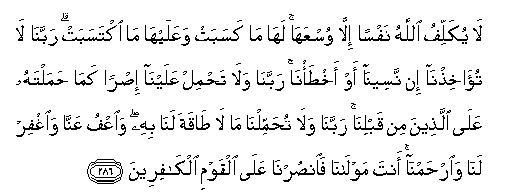
Translation: The Messenger believeth in what hath been revealed to him from his Lord, as do the men of faith. Each one (of them) believeth in Allah, His angels, His books, and His messengers. “We make no distinction (they say) between one and another of His messengers.” And they say: “We hear, and we obey: (We seek) Thy forgiveness, our Lord, and to Thee is the end of all journeys.”

Translation: On no soul doth Allah Place a burden greater than it can bear. It gets every good that it earns, and it suffers every ill that it earns. (Pray:) “Our Lord! Condemn us not if we forget or fall into error; our Lord! Lay not on us a burden Like that which Thou didst lay on those before us; Our Lord! Lay not on us a burden greater than we have strength to bear. Blot out our sins, and grant us forgiveness. Have mercy on us. Thou art our Protector; Help us against those who stand against faith.”

These 2 verses are often recited in Prayer and are fairly easy to memorize. Recite them every night and familiarize yourself with the translation. There is great merit in the recitation of these verses and we can all benefit from them. The last verse is also a supplication to Allah and Insha Allah, by reciting these verses regularly, our prayer will also be accepted.

May Allah pardon our sins and grant us the strength to bear our burdens. Ameen.

Spreading Salaam: The Islamic Greeting

In the name of Allah, most Gracious, most Merciful.

On the authority of Abu Hurayrah (May Allah be pleased with him) it is related that the Prophet (Peace be upon him) said,

“I swear by the one in whose hand lies my soul that you will not enter paradise until you believe. And you shall not believe until you love one another. Shall I tell you something, that if you practice it you will love another? Spread the (Salaam) Islamic greeting amongst yourselves.”

I heard an interesting lecture by Sheikh Anwar Al-Awlaki which reminded me of the importance of spreading Salaam. The Islamic greeting was one of the first orders given to Prophet Adam (A.S) and is a small act of faith many of us may neglect. Many of us study and work with both, Muslims and non-Muslims and I believe it is important to display our faith and its teachings no matter who we associate with.

When in the presence of Muslims, its important to establish the Salaam (Islamic Greeting) as a priority, thereafter you can use any greeting you see fit to address the rest of the group. There’s nothing wrong in saying G’day or Hi, but when addressing fellow Muslims, it is a duty upon us to greet them respectfully and appropriately. The Prophet Muhammad (S.A.W) always established the Salaam first and thereafter would say “An’im sabaahan” or “An’imu sabaahan”  which is the Arabic equivalent of Good Morning.

So don’t be ashamed of spreading Salaam, greet those whom you know and those who you may not know and educate the people around you so they may also learn from the teachings of Islam.

It is narrated on the authority of ‘Abdullah b. ‘Amr that a man asked the Messenger of Allah (may peace and blessings be upon him) which of the merits (is superior) in Islam. He (the Holy Prophet) remarked: That you provide food and extend greetings to one whom you know or do not know.

As-Salāmu `Alaykum – السلام عليكم
Peace be upon you…

Lending a helping hand!

In the name of Allah, most Gracious, most Merciful.

____________________________________

To help a Muslim in some important work and to do it for his sake or to remove his troubles and worries is an act which has been promised much reward by the Prophet. Abdullah bin Omar said that our Holy Prophet said, “’One who helps someone in his need, Allah helps him in his work, and one who removes any worry or trouble of any Muslim, Allah, in return, removes anyone of his worries on the Day of Judgment’. (Abu Daud, Kilab-al-Adab, Bad-al-Muvakhat)

Showing someone the way, sharing someone’s load or helping him with it, and all other acts of public service are included in the acts defined by this Hadith.  “Those who help others are truly much blessed,” as the Hadith says, “Best people are those who are useful to others.”

Hence all occasions of service, big or small, must be sought for; this increases one’s merits. If someone is a victim of tyranny, it is the duty of every Muslim to save him from it.

A Hadith tells us that the  Prophet Muhammad (S.A.W) said “A Muslim is the brother of another Muslim”, and “A brother does not leave his brother helpless nor does he lie to him nor yet makes false promises, nor treats him with cruelty.” (Tirmidhi: AI Birr wa-al- Silah)

Another Hadith states that, “If a Muslim is being insulted and degraded and his honour besmirched somewhere and another Muslim leaves him helpless, Allah would leave the latter helpless on occasions when he would need help. And if any Muslim helps him in when he is insulted and degraded, Allah shall help him when he would need help” (Abu Da’ud: Adab)

Helping a Muslim includes appropriate refutal of any wrong charges or insinuations levelled against another Muslim. Abu Darda’ report that our Holy Prophet has said, “One who defends the honour of his brother, Allah keeps the fire of hell away from his face on the Day of Judgment.” (Tirmidhi: al Birr wa al Silah, Chapter 20) *

____________________________________

* Above post written and researched by a friend and fellow brother in Islam – May Allah reward him.

In the wake of the current crisis in Egypt and the ongoing struggle for Palestine, it is important to understand that as Muslims and as Human Beings, we have certain rights and obligations towards each other.  Remember this when you next see someone in need and if you can assist, do so with sincerity and for no reason but for the abovementioned Hadith. It is important to remind ourselves of such sayings and Hadith so if we are given the opportunity to assist or lend a helping hand, we do so for the right reasons, with the right intentions and Insha Allah we’ll be rewarded.

Following the recent flood crisis in Queensland, an Imam urged his congregation to extend the Muslim brotherhood to the people of Queensland. He emphasised the need and the duty for  Muslims to assist the broader community especially at times of crisis. I believe this is one of the greatest forms of Dawah and is an effective way of displaying our Faith.

I would like to emphasise the principle in the above Hadith and extend it to both, Muslims and non-Muslims. We engage with members of various faiths and beliefs on a daily basis and our religion is on display and under scrutiny 24/7. Islam teaches peace, love, respect and understanding and does not limit it to Muslims only. Sometimes lending a helping hand could make the difference between a Muslim and non-Muslim.

I hope we can implement this in our daily routine, spare a thought for your neighbour, your colleague, the guy on the street or the old lady at the shopping centre. Even the smallest of actions could have ever-lasting effects.

May Allah assist us and allow us the opportunity to assist others.


Dead Sea Seacret… Religious Perspective!

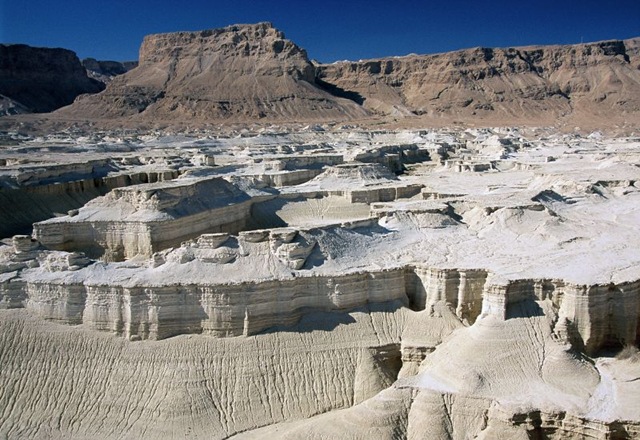
The Dead Sea

I was quite impressed after sampling a treatment from a “Seacret” store in the mall the other day and found that the source of these treatments was the Dead Sea. I could recall a few childhood stories about the Dead Sea which made me question the permissibility and appropriateness of using such treatments. This is what I found:

According to Islamic and Biblical traditions, the Dead Sea is the site of the ancient city of Sodom, home of the Prophet Lut (Lot), peace be upon him.

Prophet Lut (A.S.), after consulting with Prophet Ibrahim (Abraham) (A.S.) left Misr and traversed towards the eastern part of Urdun (Jordan), a place called Sodom or Sadoom. The purpose of his migration was to propagate the teachings of Ibrahim (A.S.) amongst the inhabitants of Sodom, a village situated in the area where the Dead Sea is presently located.

The people of surrounding areas firmly believe that the region in which the Dead Sea is found was once occupied by the people of Sodom. This nation directly rejected the message which Prophet Lut (A.S.) presented to them, due to which they were punished most severely, as described by Allah, “So at day break a mighty cry seized them. Then We turned the localities upside down and We showered upon them rocks of baked clay. In this (incident) there are indeed multiple signs for the people who discern.” (Surah Hijr, Verse 73)

The earth on which they lived was lifted into the sky and then caused to come crashing down approximately 400 meters below the earth. As a result, this area was submerged, and is now known as the Dead Sea. (Qasas ul Qur’an, Vol. 1, Page 257, Mukhtasar Tafseer Ibn Katheer, Vol. 2, Page 312) According to scientists, the area is covered in large deposits of sulphur. For this reason, no life in the form of animals or plants is to be found there and the region stands as a symbol of destruction.

It has been reported by Abdullah ibn Umar (R.A.), that when Prophet Muhammad (S.A.W.) descended at the place of Hijr (the region where the nations of ‘Aad and Thamud once resided) during the battle of Tabuk, he (S.A.W.) commanded the Sahabah (companions) not to drink from the accursed place. The Sahabah informed the Prophet (S.A.W.) that they had already utilized the water for making dough and drinking. The Prophet (S.A.W.) instructed them to discard the dough and water.

While commenting on this Hadith, Imam Hajar Al-Asqalani (R.H.) outlines that the Hadith clearly teaches us that, it is Makrooh (impermissible) to use the water found in the area of Hijr. He further states, that the same ruling will apply to other accursed places.

The Prophet Muhammad (S.A.W), reportedly tried to dissuade people from visiting the sites of God’s punishment: “Do not enter the place of those who were unjust to themselves, unless you are weeping, lest you should suffer the same punishment as was inflicted upon them.”

The Qur’an describes that the site of this punishment has been left as a sign for those who follow: “Surely! In this are signs for those who understand. And verily, they (the cities) are right on the high-road. Surely! Therein is indeed a sign for the believers.” (Qur’an 15:75-77)

In light of the above narrations, revelations and explanations, we can conclude that the use of products derived from the Dead Sea is inappropriate and should be avoided. I hope we can all benefit from this Insha Allah. May Allah strengthen our faith and make us among those who guide and whom are guided.

Ameen.

Assalaamu Alaikum!

Rain: Neglected blessing!

In the name of Allah, most Gracious, most Merciful.

I found myself questioning the wet weather this holiday season and was reminded of how much we neglect this blessing from Allah. How often do we even acknowledge  this bounty? Every favour from our Lord is indeed a bounty and deserves recognition and gratitude.

“And He who sends down (from time to time) water from the sky in due measure, and We raise to life therewith a land that is dead. Even so will you be raised (from the dead).” (Surat az -Zukhruf, 11)

“It is Allah Who sends the Winds, and they raise the Clouds: then does He spread them in the sky as He wills, and break them into fragments, until you see rain-drops issue from the midst thereof: then when He has made them reach such of his servants as He wills behold, they do rejoice!”

“We send down pure water from the sky. That with it We may give life to a dead land, and slake the thirst of things We have created,- cattle and men in great numbers.” (Surat al – Furqan, 48- 49)

“And We send down from the sky rain chartered with blessing, and We produce therewith gardens and grain for harvests.” (Surah Qaf, 9 )

Thank Allah for the bounties around you, despite the inconvenience at times, they are gifts from the Almighty. Being grateful for Allah’s bounties is a form of Dhikr, if you constantly thank Allah for his blessings, you will always remember Allah… “Therefore remember Me. I will remember you. Be grateful to Me and never show Me ingratitude” – Al-Baqarah 2:152.

May we always be grateful for the bounties & blessings from Allah!

Ameen!

Backbiting & Gossip…

I read an interesting article on backbiting and gossip recently which I’d like to share as a reminder to us all. It is something we can all relate to and unfortunately something we very often participate in. The issue is not the nature or severity of the sin, I believe the real issue lies in our failure to acknowledge and recognise the fact that backbiting and gossiping are sinful acts. The recognition of certain acts as sinful or haraam is embedded in our minds from childhood and are therefore easier to reflect upon and acknowledge even as we grow up, however, the acts that are overlooked in our early years can easily be overlooked and even justified as we grow up. Unfortunately, backbiting and gossip are easily overlooked and pose a greater threat to us as we develop and grow. I hope this article serves as a reminder to us of the severity of these sins and also allow us to recognise and acknowledge them as sins so we are better able to avoid and resist them.

___________________________________________________________

Many gatherings produce nothing but gossip about other Muslims and slander of their honour. This is something which Allah has forbidden His slaves, and has drawn the most repulsive analogy to put them off. He says (interpretation of the meaning): “. . . neither backbite one another. Would one of you like to eat the flesh of his dead brother? You would hate it . . .” [al-Hujuraat 49:12]

The Prophet (peace and blessings of Allah be upon him) explained the meaning of this aayah. He said: “Do you know what gheebah (gossip or backbiting) is?” They said, “Allah and His Messenger know best.” He said: “To say something about your brother that he does not want to be said.” He was asked, “What do you think if what is said about him is true?” He said, “If what you say about him is true, this is backbiting, and if what you say about him is not true, this is a lie.” (Reported by Muslim, 4/2001). Gossip or backbiting means saying something about a Muslim which may be true but which he does not like to hear spoken, whether it be about his physical appearance, his adherence to religion, his worldly affairs, his self, his behaviour or his character. There are many forms of gossip, including talking about a person’s faults and imitating him to make fun of him. People take the matter of gheebah very lightly, although it is very serious in the sight of Allah, as is indicated by the words of the Prophet (peace and blessings of Allah be upon him): “There are seventy-two forms of riba, the least of which is as bad as a man having intercourse with his own mother, and the worst of which is when a man slanders the honour of his brother.” (Silsilah al-Saheeh, 1871).Whoever is present in a gathering where gossip takes place should “forbid what is evil” and defend his absent brother. The Prophet (peace and blessings of Allah be upon him) encouraged us to do this when he said: “Whoever defends the honour of his Muslim brother, Allah will protect his face from the Fire on the Day of Resurrection.” (Reported by Ahmad, 6/450; see also Saheeh al-Jaami’, 6238).  

Some people go about repeating the words of others to cause trouble between people; this is one of the greatest causes of broken relations and stirring up feelings of hatred among people. Allah condemned the one who does this (interpretation of the meaning): “And obey not everyone who swears much, – and is considered worthless, a slanderer, going about with calumnies.” [al-Qalam 68:10-11]Hudhayfah reported that the Prophet (peace and blessings of Allah be upon him) said: “No eavesdropper will enter Paradise.” (Reported by al-Bukhaari, see al-Fath, 10/472; “eavesdropper” here refers to a person who eavesdrops on others without their knowing, then goes and tells others what he has heard)

Ibn ‘Abbaas said: “The Prophet (peace and blessings of Allah be upon him) passed by one of the gardens of Madeenah, and heard the sound of two people being punished in their graves. The Prophet (peace and blessings of Allah be upon him) said: “They are being punished, but they are not being punished for any major sin; one of them used never to clean himself properly after urinating, and the other used to spread malicious slander . . .” (Reported by al-Bukhaari; see Fath al-Baari, 1/317).

___________________________________________________________

I hope this article has highlighted and reiterated the severity and consequences of backbiting & gossip. My intention was not to scare or depress anyone, but rather to serve as a reminder and hopefully a deterrent towards these sinful acts. It is important to teach our children about theses acts so they grow and develop with the acknowledgement and recognition of these acts as sinful. Don’t promote backbiting and gossip by asking children about other kids at school and don’t backbite or gossip about others in the presence of your kids. What we learn as children and the habits we develop as kids will be reflected in our actions as adults, we need to encourage an Islamic upbringing in order to promote an Islamic lifestyle. I think a good start would be to stop backbiting and gossiping ourselves and Insha Allah the people around us will follow.

Thanks for reading, may Allah make us among those who are guided and among those who guide. Ameen.